Foster & Volunteer
When a rural shelter posts a euthanasia list, the animals on it do not need a miracle. They need a bed that is not concrete and someone who can answer questions about them. That is what a foster home is. You keep the dog or cat for a few weeks, you learn who they are, and we use what you learn to find the family that fits.
Volunteers do the rest of the work that keeps the pipeline moving: transport runs, laundry, weekend meet and greets, photos that actually look like the animal. No experience required for most of it. We will teach you the parts that need teaching.
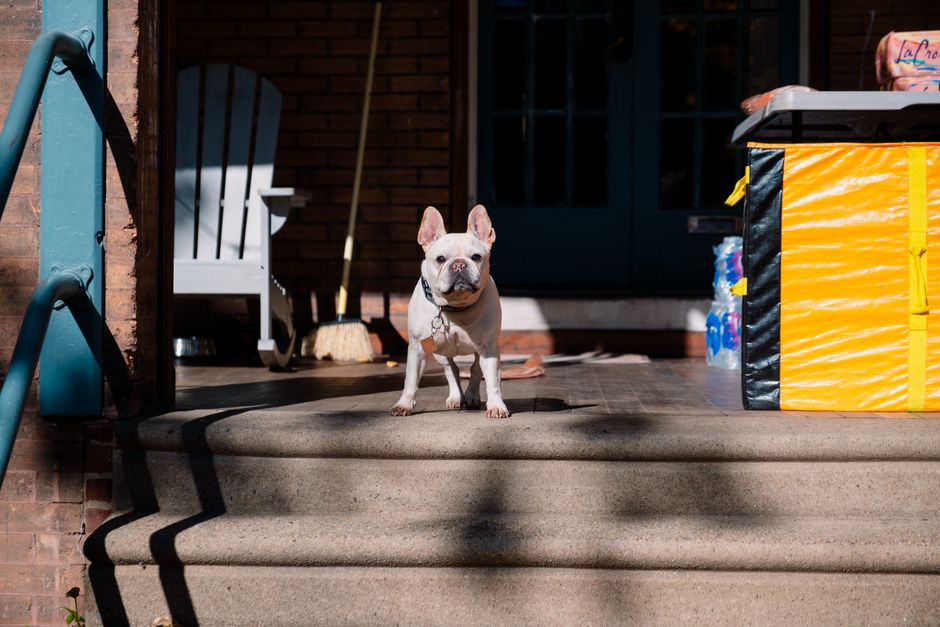
Rosie, four days out of a county shelter, learning what a porch is.
Fostering should not cost you money or leave you guessing. Everything below is handled by the rescue, for every animal in every foster home.
Medical
Vaccines, spay or neuter, heartworm testing, dental work, the surprise ear infection at 9pm. Our partner clinics bill us directly. You never hand over a card.
Supplies
Pick it up from the barn pantry or we drop it at your door on the transport route. If your foster eats a prescription diet, we buy that too.
Support
Every foster gets a coordinator by name and a text line that stays open evenings and weekends. Housetraining setbacks and barrier barking are normal. Ask early.
Training
Our trainer runs a free Saturday session at the lounge and does home visits for dogs coming off a hard shelter stay. Reward based, no shortcuts.
Adoption work
Reference checks, vet history, home conversations, contracts. Your job is to tell us the truth about your foster. Ours is to find the family that matches it.
Time off
Wedding, work trip, rough week. Give us a few days notice and a backup foster or a boarding partner takes over. Fostering does not mean you stop having a life.
Most volunteers give two to four hours a week. Some give one Saturday a month. Both matter.
How fostering runs
The form takes about ten minutes. Then a coordinator calls you. We ask about your other pets, your work hours, your stairs, your fence. There is no wrong answer, only a better match.
In person or over video, whichever is easier. We are looking at where the crate goes and how a nervous dog gets outside, not at your housekeeping.
You tell us your limits up front: no cats, no large dogs, no bottle babies, weekdays only. We hold to them. A foster placement that fails helps nobody, least of all the animal.
Your foster arrives vetted, microchipped, and already named. Supplies come with them. Plan on a quiet first two days with the crate open and the house calm.
Walks, meals, a vet recheck if needed, and a short weekly note from you about how they handle kids, stairs, thunder, the vacuum. That note is what sells them to the right family.
You meet the adopters. You get a say. Most fosters cry, then take a week off, then text us asking who is next. Adopters usually keep sending you photos for years.

Friday transport, mile three. He rode 140 miles that morning and slept the whole way.
Fill this out for fostering, volunteering, or both. A coordinator reads every submission and replies within three days. If you would rather talk it over first, call the barn line or stop by the adoption lounge during open hours.